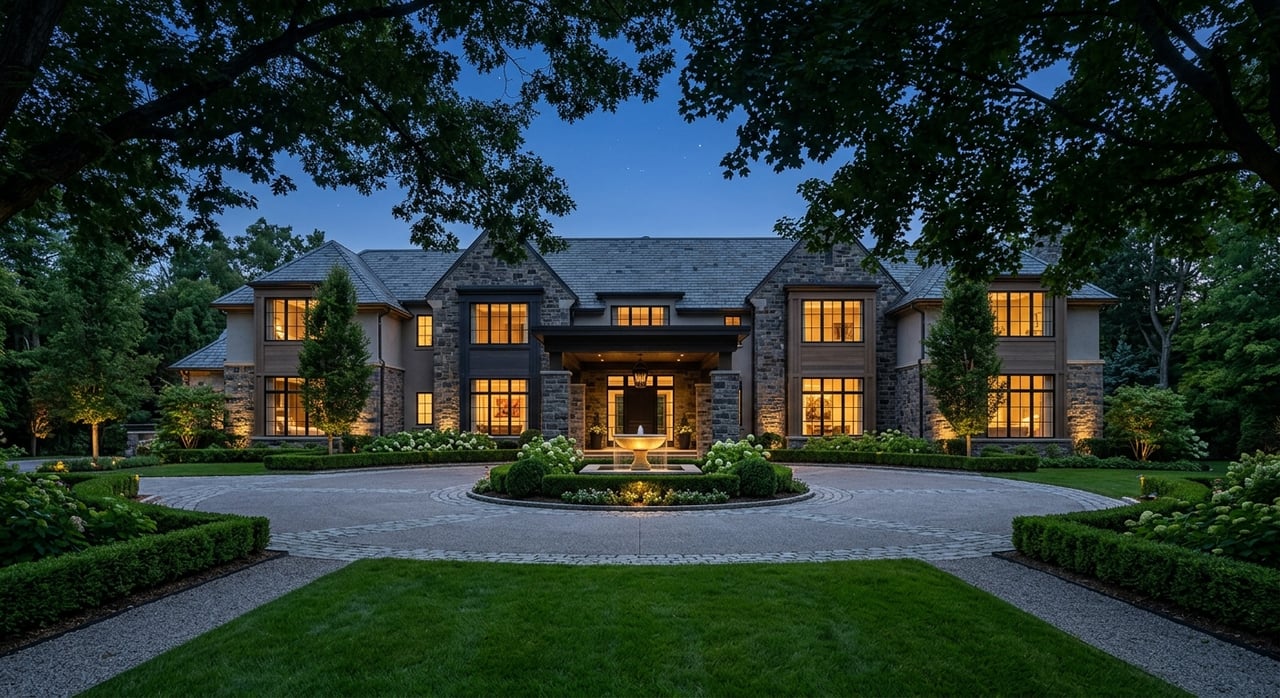
Wondering whether estate-style living in Colleyville is just about the purchase price? For many buyers, the bigger story starts after closing. If you are comparing larger homes, custom builds, or properties with pools and expansive lots, understanding the real monthly and annual carrying costs can help you plan with more confidence. Let’s dive in.
Colleyville sits in a premium market
Colleyville is firmly in the luxury conversation, but it is not priced at the very top of the DFW market. As of March 2026, Redfin reported a median sale price of $1,048,800, a median price per square foot of $281, and about 30 days on market.
That places Colleyville above nearby Grapevine and Keller, which were around $625,000 and $654,950, respectively. It also sits below Southlake at $1.3425 million and well below Westlake at $4.5 million. If you want estate-style space in a high-end suburb without jumping to the region’s ultra-luxury tier, Colleyville often lands in that middle ground.
Purchase price is only the starting point
When you look at estate-style living in Colleyville, the real cost is usually a carrying-cost story. Your ongoing expenses can shift meaningfully based on appraised value, school district, meter size, outdoor water use, pool upkeep, landscaping, insurance structure, and drainage conditions.
That matters because two homes with similar list prices may feel very different once you factor in annual ownership costs. A smart buying decision is not only about what you can purchase. It is also about what you want to comfortably maintain over time.
Property taxes can be the biggest fixed cost
For many Colleyville owners, property taxes are the largest recurring expense after a mortgage. The City of Colleyville lists its current city tax rate at $0.311931 per $100 of assessed valuation.
But the city portion is only part of the full bill. Combined rates vary depending on which school district applies inside city limits, and that difference can add up quickly.
Colleyville tax rates vary by school district
According to the city, combined total rates are:
- GCISD: $1.644011 per $100 assessed value
- HEBISD: $1.804311 per $100 assessed value
- KISD: $1.860611 per $100 assessed value
- BISD: $1.961951 per $100 assessed value
On a $1,000,000 appraisal, that works out to about:
- $16,440 in GCISD
- $18,043 in HEBISD
- $18,606 in KISD
- $19,620 in BISD
That means the district line alone can change your annual tax bill by several thousand dollars, even if the city tax rate stays the same.
Age-based exemptions may reduce the bill
Colleyville also provides a $65,000 exemption for residents over 65 and disabled residents, along with a tax freeze for qualifying owners. For some households, that can make a notable difference in long-term ownership costs.
The city also notes that property taxes are collected through the Grapevine-Colleyville area tax office, not through city hall. That is a small administrative detail, but it is useful to know when you are planning for payment timing and escrow questions.
Utility costs rise with lot size and water use
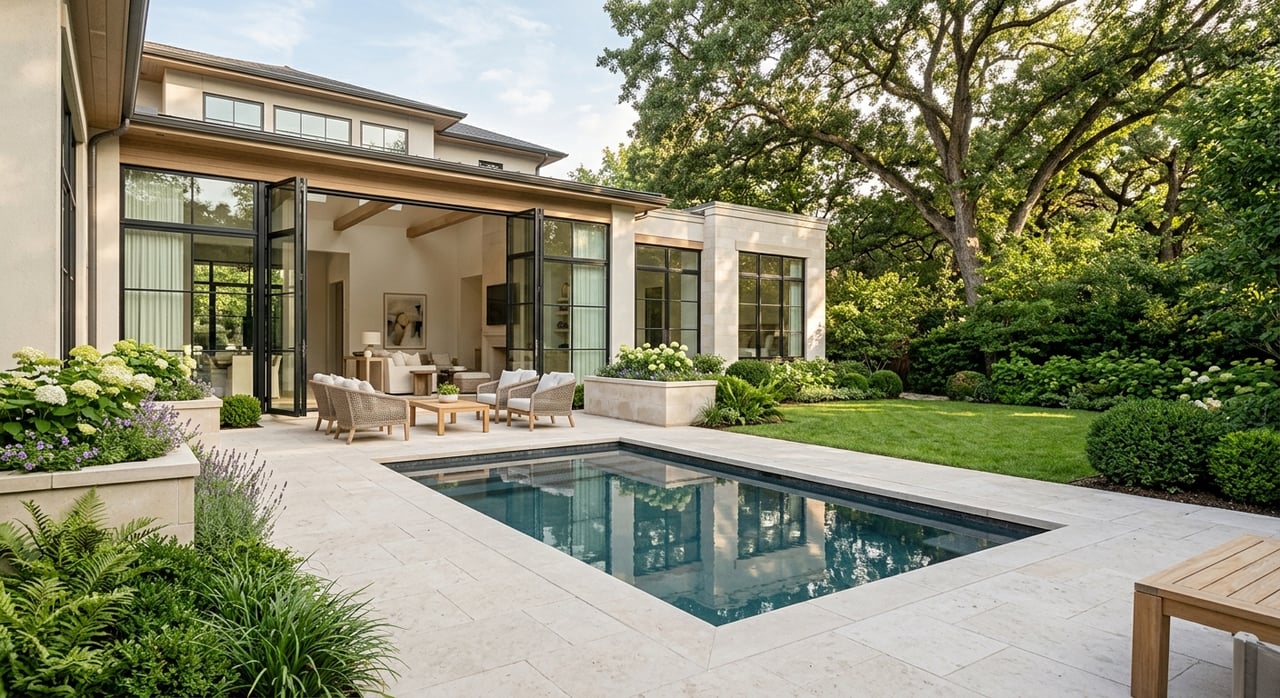
Estate-style homes often come with larger lawns, more landscaping, and sometimes a pool. In Colleyville, those features can affect utility bills faster than many buyers expect.
The city’s utility schedule shows that fixed monthly charges vary by meter size. Larger properties may need larger meters, and that increases the baseline cost before you even turn on irrigation.
Fixed monthly utility charges by meter size
Colleyville’s published rates produce approximate fixed monthly charges of:
- 1-inch meter: $75.45
- 1.5-inch meter: $98.64
- 2-inch meter: $126.49
- 4-inch meter: $284.25
These totals include water base charges, sewer base, trash and recycling, stormwater, and the utility capital-project fee. They do not include water or sewer consumption.
Consumption charges add up quickly
Colleyville charges:
- $6.46 per 1,000 gallons of water
- $4.65 per 1,000 gallons of sewer volume
If you have a large yard, irrigation demand alone can push usage up during warmer months. A pool fill or refill can also move the bill fast. On estate-style properties, outdoor water use can become one of the biggest operating-cost variables.
Winter usage can affect later sewer charges
There is another detail worth watching. Colleyville bases sewer volume charges on your average monthly water use during December, January, and February.
So if you fill a pool in winter or use heavy irrigation during those months, you may raise future sewer charges. For buyers considering a larger property, this is one of those small line-item details that can have a real budget impact.
Grounds and pool care are ongoing expenses
Large lots can be beautiful, but they are not maintenance-free. Mature landscaping, broader lawn areas, and custom outdoor features all require regular care.
HomeGuide estimates lawn mowing at about $60 to $150 per acre per visit, compared with roughly $30 to $85 for a smaller 1/8- to 1/4-acre yard. That gap helps explain why estate-style maintenance often feels very different from a typical suburban lot.
Pool ownership adds another layer
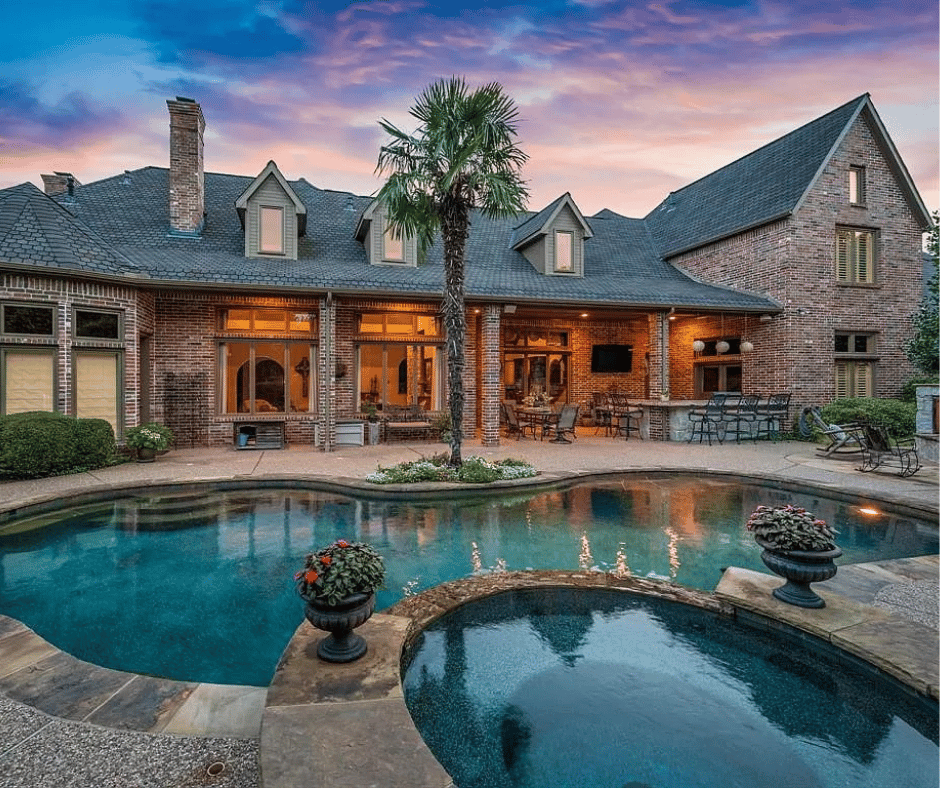
HomeGuide also estimates the annual cost to own a pool at about $3,000 to $6,000. That range includes maintenance, repairs, electricity, and water.
For a home with both a pool and a large irrigated yard, those recurring costs can become a meaningful part of the ownership picture. They are part of the lifestyle, but they are also part of the budget.
Drainage and flood context matter
Colleyville’s stormwater information notes that flooding can happen when heavy rain overwhelms drainage, that low-lying areas are at risk, and that floodplains are designed to flood. That does not mean every estate property has the same exposure, but it does mean site conditions matter.
If a home has a creek, detention area, low spot, or other drainage feature, it is wise to treat upkeep as a normal ownership cost. This is especially true on larger parcels where water movement across the property can become part of ongoing maintenance.
Insurance costs are often higher than buyers expect
Insurance is another category where estate-style homes can separate themselves from the average market. The Texas Department of Insurance reported that Texas homeowners insurance averaged $3,291 per year in 2024, and homeowners rate filings rose 4.3% on average in 2025.
That statewide average only provides a starting point. TDI also reported an average insured dwelling amount of $408,500 in 2024, which is far below many Colleyville estate homes. In practice, higher-value homes typically need much higher coverage limits.
Replacement cost matters more on larger homes
TDI explains that replacement-cost coverage pays to repair or replace a house and belongings at current prices, while actual cash value pays less after depreciation. On a custom or estate-style property, that distinction can have a major effect after a claim.
Roof condition also matters. TDI says wind-and-hail deductibles can differ from other deductibles, and roof age may affect whether a company will insure a property or what it will charge.
Flood insurance is separate
Texas homeowners policies do not cover flood damage, according to TDI. In a market where the city notes that flooding can occur when drainage is overwhelmed, that separation matters.
For some buyers, the right question is not just, “What is the homeowners premium?” It is also, “Do I need to evaluate flood insurance separately based on this property’s location and drainage context?”
A simple way to estimate real ownership costs
If you are comparing estate-style options in Colleyville, it helps to break the decision into a few practical buckets. This gives you a much clearer view than purchase price alone.
Use this Colleyville cost checklist
When evaluating a property, look at:
- Appraised value, since it directly affects tax exposure
- School district, because district boundaries can change the total tax bill
- Meter size, which affects fixed utility charges
- Outdoor water demand, especially for irrigation-heavy lots
- Pool costs, including regular service and occasional repairs
- Landscaping scope, especially on larger acreage
- Roof age and deductible structure, which can influence insurance pricing
- Drainage or floodplain context, which may affect upkeep and insurance planning
A house can be a strong fit on paper and still feel expensive in day-to-day ownership if these line items are overlooked. On the other hand, a well-chosen property with manageable carrying costs can feel much more comfortable over time.
Why this matters for buyers in Colleyville
Colleyville offers a compelling position in the DFW luxury market. You can access larger homes, custom features, and estate-style living in a premium suburb while still sitting below the pricing level of some nearby ultra-luxury markets.
The key is buying with full visibility. When you understand taxes, utilities, maintenance, drainage, and insurance before you make an offer, you can choose a home that fits both your lifestyle and your long-term comfort level.
If you want help comparing Colleyville properties through a real cost-of-ownership lens, the team at Torelli Properties Group can help you evaluate the details with clarity and confidence.
FAQs
What is the median home price in Colleyville, Texas?
- As of March 2026, Redfin reported a median sale price of $1,048,800 in Colleyville.
How much are property taxes on a Colleyville estate home?
- It depends on the home’s appraised value and school district. On a $1,000,000 appraisal, the City of Colleyville shows combined tax bills of about $16,440 in GCISD, $18,043 in HEBISD, $18,606 in KISD, and $19,620 in BISD before exemptions.
Why do Colleyville property taxes vary so much?
- The city tax rate is the same, but the combined total changes because different school-district jurisdictions apply within Colleyville city limits.
What utility costs matter most for estate-style homes in Colleyville?
- Meter size, irrigation demand, and pool water use are major factors because fixed charges rise with larger meters and the city also charges for water and sewer consumption.
How does Colleyville calculate sewer charges?
- The city bases sewer volume charges on average monthly water use during December, January, and February.
What are typical maintenance costs for larger Colleyville properties?
- HomeGuide estimates lawn mowing at about $60 to $150 per acre per visit, and annual pool ownership at about $3,000 to $6,000.
Does homeowners insurance cover flood damage in Colleyville?
- No. The Texas Department of Insurance says homeowners policies do not cover flood damage, so flood insurance must be evaluated separately.
Is Colleyville less expensive than other luxury suburbs nearby?
- Based on March 2026 Redfin figures, Colleyville’s median sale price was below Southlake and far below Westlake, but above Grapevine and Keller.