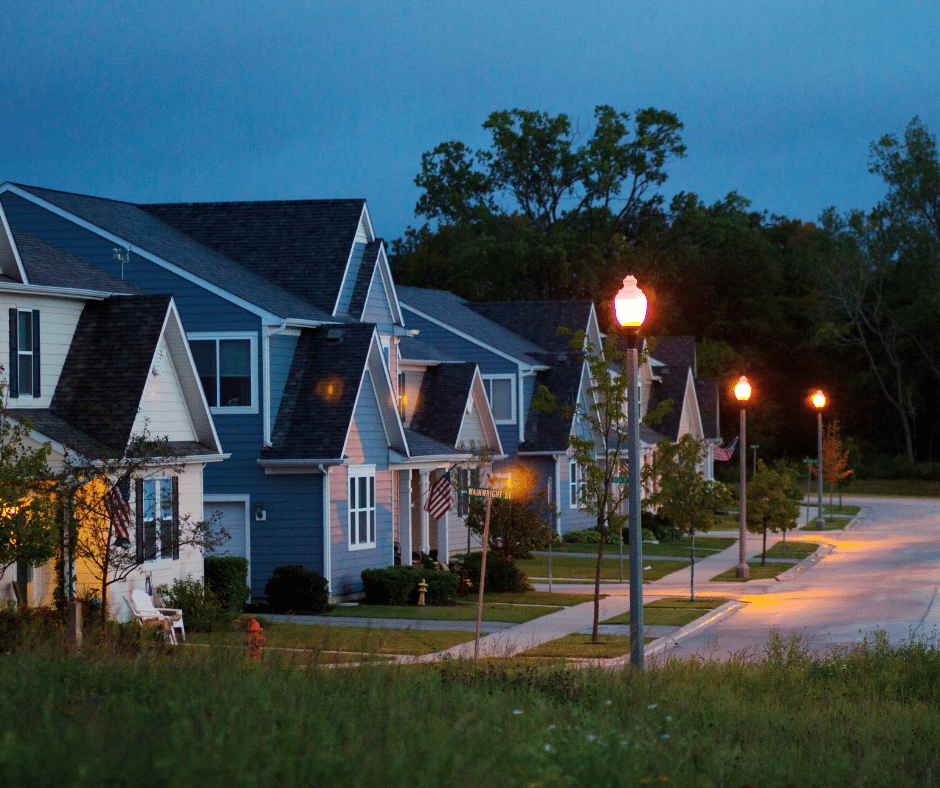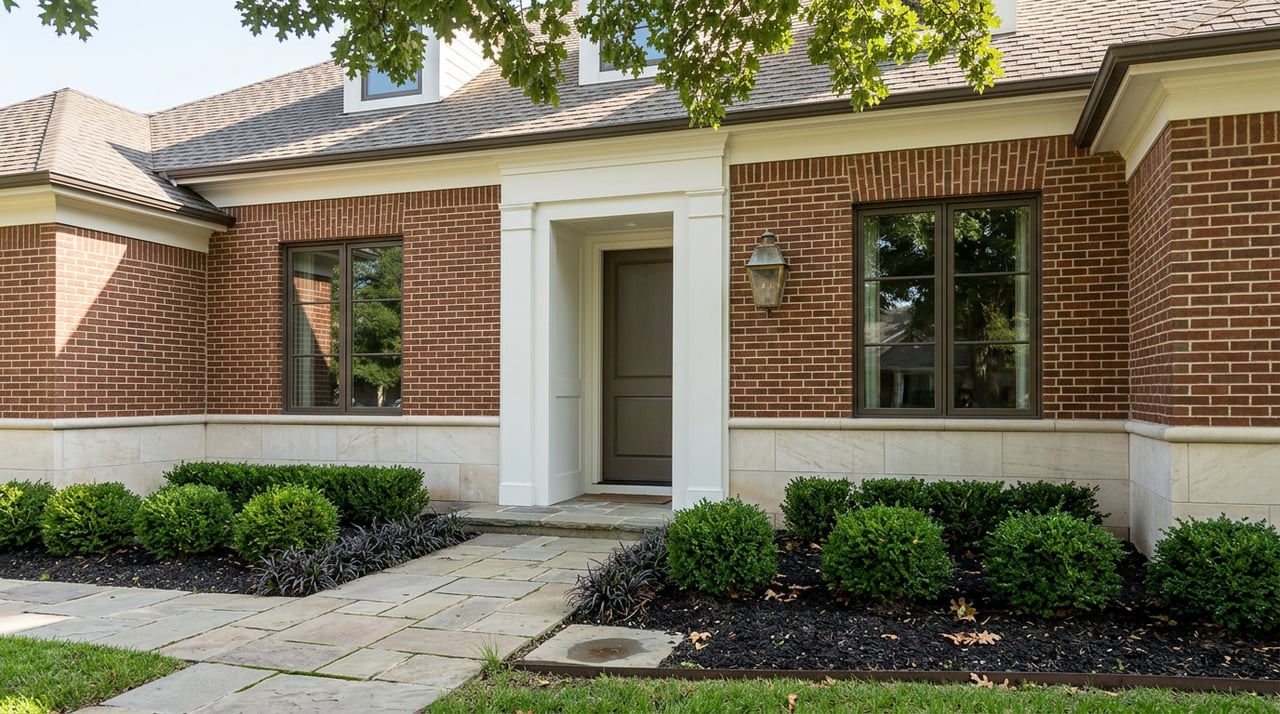
During the frenzy of 2021 and 2022, somewhere between a fifth and two fifths of Fort Worth buyers waived their inspection contingency just to win a contract. That number has fallen under 10 percent in 2026, according to local agent reports and inspection data compiled across the Tarrant County market. Buyers are looking again, closely, at what an inspector finds before they sign anything.
That shift changes what actually matters when you compare two Fort Worth listings priced within a few thousand dollars of each other. Almost every deal now includes an inspection, and in Fort Worth an inspection almost always touches the foundation. The question worth asking before a second showing isn't whether the house is old or new. It's which side of a geological line, invisible from the street, the slab is sitting on.
A boundary older than the city
Fort Worth sits at the seam between two rock formations laid down roughly 100 million years ago during the Cretaceous period, when this stretch of Texas sat at the edge of a shallow inland sea. West of downtown, the ground is built on shallow marine limestones and sandy beach deposits from the Comanche Series, the same rock exposed near Glen Rose at Dinosaur Valley State Park. East of downtown, the ground gives way to the younger, thicker clays and shales of the Blackland Prairie, soil that swells and shrinks with every wet and dry season.
The line between them, known locally as the Cross Timbers, separated more than soil types for most of Fort Worth's history. It separated economies. The thick clay soils to the east supported cotton, which is where a local saying comes from that the East stopped at Dallas and the West started at Fort Worth. The thinner, rockier soils to the west favored grazing, which is why Fort Worth grew up as a cattle town instead of a cotton town. Long before anyone poured a slab foundation, this same boundary was already deciding what kind of place Fort Worth would become.
What's actually under each side
That boundary still runs through the city, and it still behaves the way it always has.
| Side of town | Dominant formation | How the soil behaves | Neighborhoods on that side |
|---|---|---|---|
| West | Grand Prairie, sandy limestone-derived soils | Drains well and moves less | Ridglea, Benbrook |
| East | Blackland Prairie, expansive clay | Swells and shrinks aggressively with the seasons, the primary driver of slab and pier and beam movement across the metroplex | Meadowbrook, Stop Six |
Foundation crews describe the difference in blunt terms. Drive from Benbrook east toward Stop Six and the soil changes under you, with contractors reporting noticeably more settlement once you cross onto the clay side than you find on the west. That's not a sales pitch. It's a pattern repair companies see often enough to plan pier depths around it, with crews working the clay-heavy soil of south Fort Worth typically driving piers 12 to 18 feet to reach stable bearing soil below the active clay zone.
None of this makes the west side immune. Limestone weathers unevenly, and cut and fill lots on sloped ground anywhere in the city can produce their own differential settlement regardless of which formation sits underneath. Crawlspace and foundation contractors report heavy repair volume in Mira Vista, a west-side golf course community, despite its more forgiving limestone base, which is a reminder that a favorable formation is a baseline, not a guarantee. It means a buyer comparing two similarly priced homes on opposite sides of town is comparing two different soil problems, not the same problem at two price points.
The variable that ignores the line entirely
Age cuts across all of this in its own way. Fort Worth's oldest neighborhoods, Fairmount, Near Southside, Arlington Heights, Mistletoe Heights, Ryan Place, and Polytechnic Heights, were built mostly between the 1920s and the 1960s, before post-tension slab reinforcement became the newer-construction standard it is today. Many of these homes still sit on pier and beam foundations or early unreinforced slabs, and they have been absorbing shrink-swell cycles for sixty to a hundred years regardless of which formation happens to be underneath them.
That's the second variable a median price never captures. Where a home sits tells you which soil it's fighting. How old it is tells you how many decades of that fight it has already survived. A 1940s pier and beam home in Mistletoe Heights and a 1980s slab in Meadowbrook can carry similar foundation exposure for entirely different reasons, one from a century of cumulative movement, the other from sitting on some of the most reactive clay in the county.
What it actually costs, and who negotiates it
Foundation repair in Fort Worth typically runs between $2,500 and $15,000 depending on how many piers a home needs and how far the slab has settled, with full stabilization across an entire foundation climbing higher. That range holds on both sides of the city. What differs is how often a given address needs it, and that's exactly the information a soil map gives you that a listing sheet doesn't.
The current market gives buyers room to act on that information. Fort Worth's median home price came in at $335,000 in the second quarter of 2026, down slightly year over year, with active listings down 6.9 percent and closed sales up 7.6 percent, keeping the market in balanced territory at 3.8 months of supply. In a market like that, an inspection that turns up foundation movement is a negotiating point rather than an automatic deal killer. Buyers can request a structural engineer's evaluation, price in a repair credit, or simply walk toward a comparable listing on more forgiving soil, all of which are harder moves to make when inventory is tight than they are right now.
None of this is a reason to avoid the east side, or Meadowbrook, or Stop Six, or any neighborhood built on Blackland Prairie clay. It's a reason to ask the right question before you fall for a listing photo. Ask which formation the address sits on. Ask when the home was built and what kind of foundation it has. Ask for elevation readings if the inspection raises any flag at all, on either side of town. The soil under Fort Worth has been drawing this line for about 100 million years. It isn't going to move for a closing date.
When you're ready to compare specific addresses
A soil map only tells you so much. The rest comes from walking a specific street, in a specific neighborhood, with someone who already knows which side of that old line it sits on. That's the conversation worth having before you write an offer, not after an inspector hands you a report full of questions.
If you're weighing a west-side property against something on the east side, or trying to understand what a specific Fort Worth address is actually built on, Torelli Properties Group can walk you through it. Schedule Your Personalized Consultation.